Illustration by Fiki. ©2025 ISI.BIBLE
All Scripture is inspired by God and profitable for teaching, for reproof, for correction, for training in righteousness; so that the man of God may be adequate, equipped for every good work. – 2 Timothy 3:16–17
Knowing Bible chronology can be helpful in determining and understanding context during Bible study. Keep in mind that a later written book (e.g., John) may still have verses that apply to an earlier time (in John’s case, the Gospel period when Jesus lived).
METHODOLOGY
I certainly don’t profess to doing any type of original scholarly research nor to be breaking any new ground herein. What I have done is try to assess, consolidate, and organize the various dates that can already be found in literature (mostly commentaries), and then try to form what I believe is the best consensus on authorship and dating.
There is considerable difficulty—and therefore variance along with literally hundreds of opinions and conclusions, both dogmatic and cautious—in setting dates for some of books (particularly for the OT). Fortunately for us1 (since our Gospel doctrine comes mainly from the NT books) the NT book dates are much more in agreement and well known (for the most part). There is only one book (Revelation) whose interpretation can significantly depend on the date one believes it was written; for this book, I agree with the later dating.2
COMPILATION NOTES
- I utilized Grok (Grok 4.6, 2026, by xAI) to help compile the traditional conservative viewpoint material.
- I give heavier weighting to the opinions of those who also teach the Gospel correctly (e.g., Church of Christ authors).
- In some cases, I have given the final summary date range as encompassing several credible estimates.
- The authors surveyed typically relied on the opinions of even earlier biblical scholars. There is, therefore, the risk of inherited error with this approach.
- I encountered a lot of “late dating” types of opinions, generally from so-called liberal or revisionist scholars, which I (and reputable commentators) discard. I’ve not bothered to even list them.
SUMMARY TABLE
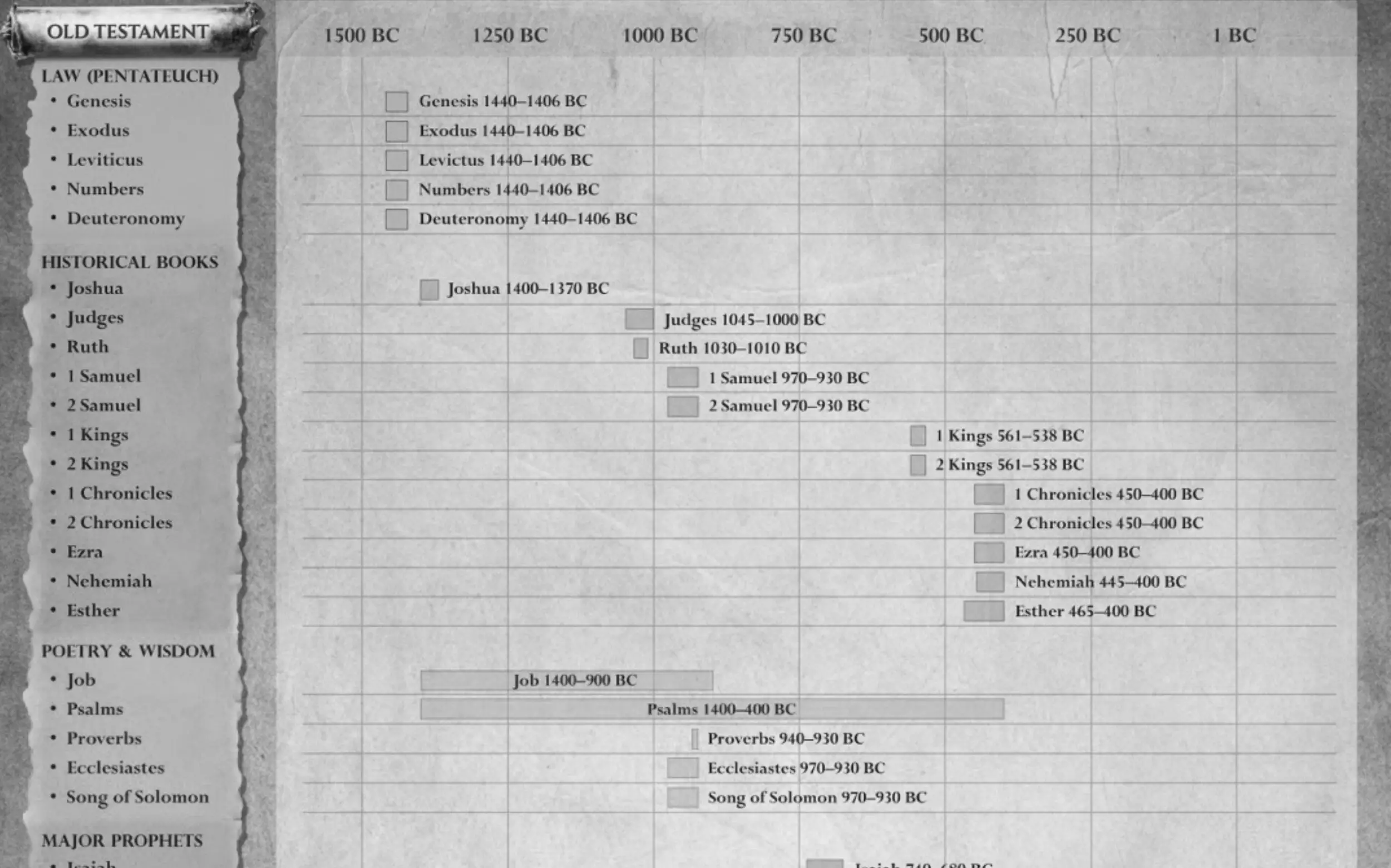
Chronology and authorship is summarized in the table below.
|
Book |
Date |
Author |
Notes |
|
Genesis |
~1440–1406 BC |
Moses |
Pentateuch (first five books) all likely written in wilderness during Exodus |
|
Exodus |
~1440–1406 BC |
Moses |
|
|
Leviticus |
~1440–1406 BC |
Moses |
|
|
Numbers |
~1440–1406 BC |
Moses |
|
|
Deuteronomy |
~1440–1406 BC |
Moses (+Joshua) |
Joshua likely added final verses |
|
Joshua |
~1400–1370 BC |
Joshua |
|
|
Judges |
~1045–1000 BC |
Samuel |
Possible contributions from other judges |
|
Ruth |
~1030–1010 BC |
Samuel |
|
|
1 Samuel |
~970–930 BC |
Primarily Samuel |
|
|
2 Samuel |
~970–930 BC |
Primarily Samuel |
|
|
1 Kings |
~561–538 BC |
Unknown |
Possibly Ezra, Jeremiah, Isaiah |
|
2 Kings |
~561–538 BC |
Unknown |
Possibly Ezra, Jeremiah, Isaiah |
|
1 Chronicles |
~450–400 BC |
Possibly Ezra |
|
|
2 Chronicles |
~450–400 BC |
Possibly Ezra |
|
|
Ezra |
~450–400 BC |
Likely Ezra |
|
|
Nehemiah |
~445–400 BC |
Ezra |
Ezra compiling material under direction from Nehemiah |
|
Esther |
~465–400 BC |
Unknown |
Possibly Mordecai |
|
Job |
~1400–900 BC |
Unknown |
Possibly Job or Moses |
|
Psalms3 |
~1400–400 BC |
David, Asaph, Moses, The Sons of Korah, Solomon, Heman the Ezrahite, Ethan the Ezrahite, Anonymous |
Individual psalms written and likely ordered by scribes at a later time (Ezra?) |
|
Proverbs |
~940–930 BC |
Solomon, men of Hezekiah, Agur, Lemuel |
|
|
Ecclesiastes |
~970–930 BC |
King Solomon |
|
|
Song of Solomon |
~970–930 BC |
King Solomon |
|
|
Isaiah |
~740–680 BC |
Isaiah |
|
|
Jeremiah |
~627–560 BC |
Jeremiah |
|
|
Lamentations |
~586–560 BC |
Jeremiah |
|
|
Ezekiel |
~593–571 BC |
Ezekiel |
|
|
Daniel |
~605–530 BC |
Daniel |
|
|
Hosea |
~760–715 BC |
Hosea |
|
|
Joel |
~835–800 BC |
Joel |
|
|
Amos |
~760–746 BC |
Amos |
|
|
Obadiah |
~848–841 BC or |
Obadiah |
Earlier Date Preferred |
|
Jonah |
~793–753 BC |
Jonah |
|
|
Micah |
~750–686 BC |
Micah |
|
|
Nahum |
~669–612 BC |
Nahum |
|
|
Habakkuk |
~608–597 BC |
Habakkuk |
|
|
Zephaniah |
~640–609 BC |
Zephaniah |
|
|
Haggai |
~520 BC |
Haggai |
|
|
Zechariah |
~520–518 BC |
Zechariah |
|
|
Malachi |
~450–400 BC |
Malachi |
|
|
Matthew |
~50–65 AD |
Matthew the tax collector |
Possibly as early as 41AD or |
|
Mark |
~55–65 AD |
John Mark |
Late 50s or early 60s |
|
Luke |
~60–65 AD |
Luke the Physician |
Companion to Paul |
|
John |
~85–95 AD |
The Apostle John |
As early as 80 AD and |
|
Acts |
~61–63 AD |
Luke the Physician |
Companion to Paul |
|
Romans |
~56–58 AD |
The Apostle Paul |
|
|
1 Corinthians |
~55–56 AD |
The Apostle Paul |
|
|
2 Corinthians |
~56–57 AD |
The Apostle Paul |
|
|
Galatians |
~48–49 AD |
The Apostle Paul |
|
|
Ephesians |
~60–62 AD |
The Apostle Paul |
|
|
Philippians |
~60–62 AD |
The Apostle Paul |
|
|
Colossians |
~60–62 AD |
The Apostle Paul |
|
|
1 Thessalonians |
~50–53 AD |
The Apostle Paul |
|
|
2 Thessalonians |
~51–53 AD |
The Apostle Paul |
|
|
1 Timothy |
~63–64 AD |
The Apostle Paul |
|
|
2 Timothy |
~66–67 AD |
The Apostle Paul |
|
|
Titus |
~62–67 AD |
The Apostle Paul |
|
|
Philemon |
~60–62 AD |
The Apostle Paul |
|
|
Hebrews |
~63–69 AD |
Unknown |
Possibly Luke writing down Paul’s material. Before 70 AD |
|
James |
~45–62 AD |
James the half-brother of Jesus |
Dates vary through the range |
|
1 Peter |
~64–65 AD |
The Apostle Peter |
|
|
2 Peter |
~64–68 AD |
The Apostle Peter |
One estimates late 40s early 50s AD |
|
1 John |
~75–95 AD |
The Apostle John |
From late 70s to early 90s AD |
|
2 John |
~85–95 AD |
The Apostle John |
From late 70s to early 90s AD |
|
3 John |
~85–95 AD |
The Apostle John |
From late 70s to early 90s AD |
|
Jude |
~65–80 AD |
James the half-brother of Jesus |
From late 40s to as late as 90 AD |
|
Revelation |
~95–96 AD |
The Holy Spirit via The Apostle John |
Later Date Strongly Supported by External Evidence vs “Internal Grammar” Issues |
SOURCE DATA
Dating and authorship for each book is given in the PDF version of this study (see the link below). The following legend is used:4
- TC: Traditional Conservative Opinion
- RP: Resource Publications Commentary Series (various authors)
- WJ: Wayne Jackson (Christian Courier)
- GA: Gospel Advocate Commentary Series (various authors)
- MH: Matthew Henry (based on his commentary)
- AC: Adam Clarke (based on his commentary)5
NOTES & FURTHER INFO
1 I am using this loosely as a figure of speech, but know that the Lord (and the Holy Spirit who inspired the Word of God) does nothing by fortune, luck (good or bad), or chance. Therefore, if we needed to have and know the dates of various books, we know and have the various dates of those books known to the degree necessary to form correct doctrine.
2 See source data below.
3 → [An Expositional Study of Selected Psalms]
4 See our Helpful Resources—Books & Commentaries list on our website.
5 Adam Clarke’s opinion is consulted due to his knowledge of biblical manuscripts, not for his Methodist doctrine.