Illustration by Fiki. ©2025 ISI.BIBLE
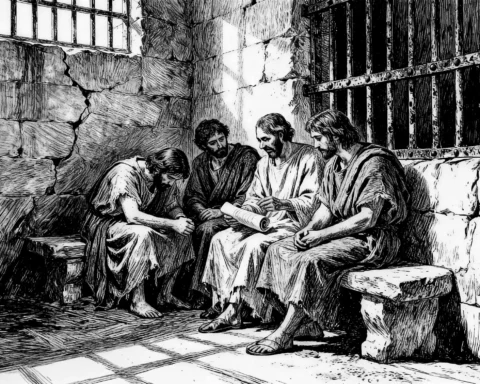
But about midnight Paul and Silas were praying and singing hymns of praise to God, and the prisoners were listening to them. – Acts 16:25
Again in the Book of Acts, we read about Paul and Silas in prison (Act 16:17–40). Because they were speaking the truth and, more specifically, because they had interfered with the idols, greed, and profits of corrupt and evil men and women, the mob “struck them with many blows, [and] they threw them into prison … and fastened their feet in the stocks” (vv. 23–24). Prisons in that day were generally rough, tough, cold, dark, damp, and unpleasant. We don’t have all the details here, but it most certainly wasn’t a joyful or comfortable situation to be in, even for a short time!
Further on, we read that God miraculously intervened to set them free (v. 26), but because their jailer would suffer if the prisoners escaped, Paul and Silas stayed in the jail (vv. 27–28).1 They placed the jailer’s welfare and life ahead of their own—even ahead of their own comfort, well-being, and safety. Paul and Silas are hereby giving a real-world demonstration of the commandment: “You shall love your neighbor as yourself” (see Mat 5:43; 7:12; 19:19; 22:39; Mar 12:31; Luk 10:27; cf. Gal 5:14; Rom 13:8–10; Jas 2:8). The result of all this was that the jailer and his whole household were saved (vv. 29–34). Amazing and amen!
The important lessons I take away from this example are the following:
- Paul and Silas didn’t become discouraged, depressed, anxious, fearful, or suicidal due to their circumstances; instead, we read that “about midnight Paul and Silas were praying and singing hymns of praise to God, and the prisoners were listening to them” (v. 25). What a spirit of thankfulness, joy, and peace! Amazing! They weren’t anxious or worried in the least; instead, they were humble, calm, collected, composed, dignified,2 and still standing for the truth of the Gospel and Christ even while being mistreated, wrongly imprisoned, and in an awful situation. They knew full well that the Lord was with them and that He knows and sees all things at all times.3
- Paul backed up his words (his preaching and teaching) by his actions (1Co 9:12, 22–23; 2Co 1:17; 2Ti 2:10; cf. Mat 5:37; Rom 2:13; Jas 1:22; 2:21–25)—he wasn’t a hypocrite (a Christian in name only).4, 5
- Paul and Silas (or, more likely, the other prisoners) could have exacted their own vigilante vengeance on the jailer after being let out of their cells, but they did not do that. In fact, they all chose to remain in their cells at the urging of Paul (v. 28).6 We must remember that it is written: “Never take your own revenge” (Rom 12:19); “Never pay back evil for evil to anyone” (Rom 12:17); and “Do not be overcome by evil, but overcome evil with good” (Rom 12:21).7
- Even while wrongly locked up in prison, for they had broken no laws, Paul and Silas were still “ambassadors” for Christ (see 2Co 5:20; Eph 6:20), and by their actions and behavior they helped others to be saved!8 It is written, “Love your enemies and pray for those who persecute you” (Mat 5:44; cf. Rom 12:14). Paul and Silas did just that in this case, and they “bore fruit” for the Lord (see Mat 3:8; 7:19; Mar 4:20; Luk 8:15; Joh 15:2, 4, 16; Rom 7:4). Amen.
CHAPTER PRAYER
Father, thank You for all that You have done for me. Please let me be a light to the lost even when I’m in a dark, dangerous, or uncomfortable situation myself. Help me demonstrate the love of Christ by my actions at all times and be obedient to all Your commandments. I offer up this prayer with praise and thanksgiving. Amen.
1 The jailer (guard) would have been put to death if the prisoners escaped (for any reason). Paul and Silas even convinced the other prisoners to remain also!
2 Note that they didn’t act like a pack of wild animals when they were freed!
3 We must remember that He is with us each and every moment: “I am with you always, even to the end of the age [world]” (Mat 28:20; cf. Gen 28:15; Deu 31:6–8; Jos 1:5; Isa 41:10; Psa 23:4).
4 “Hypocrites” (Mat 6:2, 5, 16; 15:7; 22:18; 23:13–15, 23–29; 24:51; Mar 7:6; Luk 12:56; 13:15; cf. Mat 15:8; Mar 7:6) who profess faith in Jesus but do not keep the “commandments” of Christ (Joh 14:15) or do “the will of God” (Mar 3:35; Rom 1:10; 12:2; 15:32; Eph 6:6; Heb 10:36; 1Pe 4:2, 19; 1Jn 2:17) will be judged accordingly. → [The Commandments of Christ] for a study of all the commandments of Jesus and the instructions of His apostles.
5 → [The Role of Works]
6 Brother or sister in Christ, I ask: Would you have remained in your cell in this situation?
7 Please note that they didn’t pick up weapons to fight back, as so many professing Christians would have done today, nor did they respond to the jailer with vulgar language, abusive speech, threats of vengeance, mocking, ridicule, taunting, derogatory language, and so on. We are not to be prickly characters, quick to respond to insults, attacks, or persecution with returned insults, anger, violence, threats, or vengeance (of any kind, for any reason; Rom 12:14–21). We are to “endure all things” (see 1Co 9:12; 13:7; 2Ti 2:10; 4:5) through Christ who “abides in” us (see Joh 15:1–10). A wise Christian will, therefore, use extreme patience, restraint, and discernment in how they respond to others in all circumstances (see also Pro 15:1; 21:23). We are also to let God be the judge of others (Mat 7:1; Luk 6:37; 12:57; Joh 7:24; Rom 14:3; Jas 4:11) and to let Him handle all vengeance (Rom 12:14, 17–21; Heb 10:30; 12:29; Mat 5:44; 1Pe 2:23; 3:9; 1Co 13:4–5; cf. Act 7:60; Luk 23:34; Rom 16:20; 2Th 1:6–8). Those who follow unlawful or unjust orders to harm, persecute, or oppress others will have to answer to the Lord one day for their own choices and actions.
8 Note also that Paul, while bound in chains in jail, was asking for prayers not for them to escape from jail but for God to open a door for them to preach the truth of the Gospel (Col 4:3–4) there! Amazing!