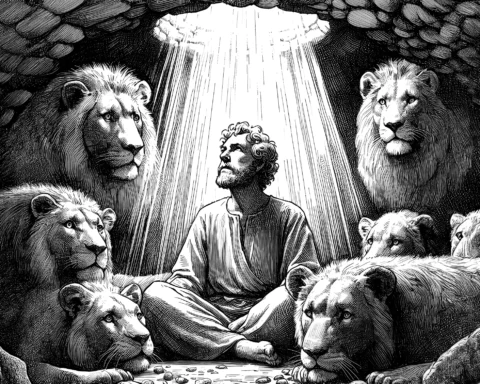
ILLUSTRATION BY FIKI. © 2025 ISI.BIBLE
The fool has said in his heart, “There is no God.” – Psalm 14:1
In days and centuries past, men understood and acknowledged that there was a God, even if they chose not to obey Him (Act 17:23; Rom 1:20–22; cf. 2Co 4:4). But in today’s modern, so-called “enlightened” society dominated by public opinion and the science of man, we must reassert that foundation before we can even begin with the Gospel message.
Therefore, know that “there is a God” (Psa 58:11; Dan 2:28; cf. Gen 1:1; Deu 4:29; Psa 14:1–3; 19:1–3; 53:1–3; 90:2; 115:15; 145:18; Pro 1:7; 3:5–7; 9:10; Isa 40:28; 55:6; Jer 29:13; Luk 12:5; Joh 1:18; Act 17:22–29; Rom 1:20–21; 1Co 8:6; 1Th 1:9; Heb 11:6; 1Jn 4:8; Rev 3:20; 4:11). There are no other gods (little g; Isa 44:8; 45:5–6, 18, 21–22; 46:9; Deu 4:35, 39; 32:39; 1Ki 8:60; 1Ch 16:26; Psa 96:5; Joe 2:27; 1Co 8:4; 1Ti 1:17; 2:5; Rom 1:20–25). God is not a force, a feeling, or an “it”; He is a spiritual being of immense holiness, righteousness, love, purity, power, and intelligence far beyond anything we can comprehend (Isa 6:3; 55:8–9; Pro 3:19; Rev 4:8; 1Pe 1:16; 1Jn 4:8–10).
THE NAME OF GOD IN THE OLD TESTAMENT1
God introduces Himself in the very first verse of the Bible and is identified by the Hebrew2 word “Elohim,”3, 4 which is translated in English as “God” (Gen 1:1). The word conveys the quality or nature of being divine—that is, having the essential nature of deity.
God’s personal name is later given as “YHWH” in the original Hebrew (Gen 2:4; Exo 6:2–3).5 It indicates and denotes God’s self-existent, eternal nature. You will see this written as “Lord” (small caps), “Yahweh,” and “Jehovah” (small caps) / “Jehovah”6 in various English translations.
The Hebrew word “Adonai,”7 which means Lord or Master, written as “Lord” (standard case), is also used for God (e.g., Gen 15:2, 8; 18:27; Exo 4:10, 13; Isa 6:1; Dan 9:19). You can also see combinations of these words written as “Lord God”8 (e.g., Gen 2:4–5, 7–9; Exo 9:30; Psa 72:18) and “Lord God”9 (e.g., Gen 15:2, 8; Deu 3:24; Jos 7:7; Psa 71:5; 73:28).
God’s name is also given in idiom form as “I AM WHO I AM” or simply “I AM” (Exo 3:13–14).10
In summary, you will see God identified in the OT, in the following ways:
- “God” (Elohim; e.g., Gen 1:1–31; 2:2–3; 5:1; Exo 3:6; Psa 3:2, 7; 5:2; 42:1–6; 43:4–5),
- “Lord”11 (YHWH; e.g., Gen 2:4–5; Exo 6:1–3; Psa 1:2, 6; 2:2, 7, 11; 6:2–4, 8–9; 35:1),
- “Lord”12 (Adonai; e.g., Gen 18:27, 30–32; Exo 34:9; Psa 2:4, 37:13; 54:4; 66:18),
- “Lord God” (YHWH Elohim; e.g., Gen 2:4–5, 7–9; Exo 9:30; Psa 72:18),
- “Lord God” (Adonai YHWH; e.g., Gen 15:2, 8; Deu 3:24; Jos 7:7; Psa 71:5; 73:28),
- “Lord God” (Adonai Elohim; e.g., Dan 9:3),
- The “Lord our God” (YHWH our Elohim; e.g., Exo 3:18; 5:3; 8:10; Psa 99:5; Isa 36:7; Jer 3:22–23; Dan 9:14), and
- “I AM” (Exo 3:13–14; Cf. Joh 8:58).
Additionally, God is also referred to by many other names, which are more descriptive in nature and indicative of His position, power, presence, providence, and protection. Some examples are given below:13
- The “Creator” (Ecc 12:1; Isa 27:11; 40:28; 42:1; 43:15),
- The “Father” (e.g., see Deu 32:6; Isa 63:16; 64:8; Jer 3:4, 19; 31:9; Mal 1:6; 2:10)
- The “Lord of hosts” (e.g., 1Sa 1:3; 4:4; 1Ch 11:9; Psa 24:10; 46:7, 11; Isa 1:9),
- The “Lord our righteousness” (Jer 23:6),
- The “Lord is my shepherd” (Psa 23:1),
- The “Lord our Maker” (Psa 95:6),
- “God Most High” (Gen 14:18–22; Psa 57:2),
- “God Almighty” (Gen 17:1; 28:3; 35:11; 43:14; 48:3; Exo 6:3; 10:5),
- The “living God” (e.g., Deu 5:26; Jos 3:10; 1Sa 17:26, 36; Psa 42:2; 84:2; Jer 10:10)
- “God their Savior” (Psa 106:21 cf. Psa 17:7; Isa 43:3; 45:15, 21; 60:16; 63:8; Jer 14:8),
- The “righteous God” (Psa 7:9; cf. Isa 45:21),
- The “Holy One of Israel” (e.g., 2Ki 19:22; Psa 71:22; 78:41; 89:18; Isa 1:4; 29:23; 43:3 cf. Exo 3:18; 5:1, 3; 7:16; 9:1, 13; 10:3; 24:10; Ezr 5:1; Psa 68:35),
- The “God of Abraham, Isaac, and Jacob” (paraphrase; e.g., see Exo 3:6, 15; 4:5; Psa 20:1; 46:7, 11),
- The “Everlasting God” (Gen 21:33; Isa 40:28),
- The “Ancient of Days” (Dan 7:9, 13, 22),
- The “Lord will provide” (Gen 22:14),
- The “Lord your healer” (paraphrase; see Exo 15:26),
- The “Lord is Peace” (Jdg 6:24), and
- The “Rock” (e.g., Deu 32:4, 15, 2Sa 23:3; Psa 18:2; 31:3; Isa 26:4; 30:29).
THE NAME OF GOD IN THE NEW TESTAMENT
When the Hebrew OT was translated into Greek,14 and when the NT was written in Greek,15 the Hebrew word for “God” (Elohim) became the Greek word “Theos,” which is written in English as “God.” Additionally, the Hebrew word for “Lord” (YHWH) became the Greek word “Kurios,” which is written in English as “Lord.”16
In summary, you will see the following used when referring to God (the Father) in the NT:
- “Lord” (e.g., Mat 1:20, 22; Mat 11:25; Luk 10:21; Act 17:24; Rom 4:8; Jas 5:10),17
- “God” (e.g., Mat 1:23; Mat 3:9; Mat 6:30; Act 7:2; Rom 8:33; 2Co 1:3; 1Pe 5:10), and
- “Lord God” (kurios theos; e.g., Luk 1:32, 68).
Furthermore, God (the Father) is also referred to in more descriptive ways as well:
- “Father”18 (e.g., Mat 6:9; 11:25; Joh 3:35; 14:6; 17:1; Rom 8:15; Eph 1:3; 1Pe 1:3),
- “Our Father who is in heaven” (Mat 6:9),
- “Lord of heaven and earth” (Mat 11:25; Luk 10:21; Act 17:24),
- The “God and Father of our Lord Jesus Christ” (Rom 15:6; 2Co 1:3; Eph 1:3; 1Pe 1:3),
- The “Father of mercies and God of all comfort” (2Co 1:3),
- The “God of peace” (Rom 15:33; 16:20; Php 4:9; 1Th 5:23; Heb 13:20),
- The “Father of lights” (Jas 1:17),
- The “God of hope” (Rom 15:13),
- The “God who gives perseverance and encouragement” (Rom 15:5),
- The “God of all grace” (1Pe 5:10),
- The “Father of spirits” (Heb 12:9),
- The “Almighty,” “Lord Almighty,” or “Lord God the Almighty” (2Co 6:18; Rev 19:15; 21:22),
- The “Most High” or “Most High God” (Mar 5:7; Luk 1:32, 35, 76; 6:35; 8:28; Act 7:48; 16:17; Heb 7:1),
- The “Majesty on high” (Heb 1:3),
- The “one and only God” (Joh 5:44),
- The “only God our Savior” (Jud 25),
- The “Redeemer” (see Job 19:25; Psa 19:14; 78:35; Pro 23:11; Isa 41:14; 43:14; 44:24; 63:16; Jer 50:34),19
- A “living and true God” (1Th 1:9),20
- The “King eternal, immortal, invisible, the only God” (1Ti 1:17),21
- “Him who is true” (1Jn 5:20),
- “Him who is and who was and who is to come” (Rev 1:4),
- The “God of glory” (Act 7:2), and
- “Abba! Father!” (Rom 8:15).
Now, you might wonder why I wrote the above as referring to God (the Father). It is because the NT also refers to Jesus of Nazareth as God—which He is! Jesus will be covered separately and more fully in later chapters, and I will show from Scripture that Jesus is, in fact, God. I will also explain the names by which Jesus is identified.22
GOD IS HOLY, ALL-POWERFUL, AND ALL-KNOWING
God alone is “holy” (Lev 19:2; Rev 4:8; Act 7:33; 1Pe 1:16; Isa 6:3; Psa 11:4; 29:2; 103:1), perfect, omnipotent (all powerful), omnipresent (everywhere present), omniscient (all knowing—past, present, and future), and eternal (Joh 1:1–2; 8:58; 17:5; Rev 1:8, 17–18; 2:8; 21:6; 22:13; Heb 1:10–12; 13:8; 1Pe 1:20; Exo 3:13–14; Col 1:17; Jas 1:17; Isa 9:6; 43:13; 55:8–9; 1Jn 3:20; Rom 11:33–36; Gen 18:14; Psa 19:7; 90:2; 147:5; Pro 8:22–30; Jer 32:27; Mic 5:2).23 There is nothing unclean whatsoever in Him (1Jn 1:5; 3:5; Jas 1:17; Isa 6:3; Rev 4:8–10; Psa 5:4; 145:17; Tit 1:2; Heb 4:15; 1Pe 1:19; Num 23:19; cf. Gal 5:9), for “God is Light, and in Him there is no darkness at all” (1Jn 1:5; cf. Rom 3:4; 9:14; Mat 4:16; 17:2; Luk 1:79; Joh 1:5; 3:19; 8:12; 12:35, 46; Mic 7:8; Job 12:22). Yes, God is the Great “I AM.” He is “the Lord of hosts” (see Psa 24:10; 46:7, 11; 48:8; 84:1, 3, 12; Isa 1:9). Nothing can surprise Him or catch Him off guard, and there is nothing that He doesn’t know, for “nothing is hidden” from God.24 Furthermore, nothing is impossible with God (Mat 19:26; Mar 10:27; 14:36; Luk 1:37; 18:27; Gen 18:14; Num 11:23; Jer 32:27). He “upholds all things by the word of His power” (Heb 1:3), and it is He who created and sustains all life, for without God, there can be no life. “God is love” itself (1Jn 4:8, 16), and He is majesty defined. Amazing!
GOD IS SPIRIT
Those who mock God and refuse to believe that He exists because “science can’t prove it”25 fail to understand that “God is Spirit” (Joh 4:24; cf. 2Co 3:17), “who alone possesses immortality and dwells in unapproachable light, whom no man has seen or can see” (1Ti 6:16; cf. 1Ti 1:17; Joh 1:18; 5:37; Mat 17:2; Rom 1:20; Col 1:15–16). He is not bound by space and time, as we are in this physical universe. Therefore, we must find God through faith, as it is written:
- “Without faith it is impossible to please Him, for he who comes to God must believe that He is [i.e., that He exists] and that He is a rewarder of those who seek Him” (Heb 11:6; cf. Heb 7:25; 11:27; Joh 1:18; 5:36; 10:25, 30, 32, 38; 12:38–40; 14:7–11, 20; Col 1:15–19; 2:2, 9; Rom 1:19–20; 2:15; Psa 19:1–4; Act 14:16–17; Jas 4:8);
- “Behold, I stand at the door and knock; if anyone hears My voice and opens the door, I will come in to him and will dine with him, and he with Me” (Rev 3:20);
- “You will seek Me and find Me when you search for Me with all your heart” (Jer 29:13; cf. Jer 24:7; Deu 4:29; 30:2, 10; Luk 11:9–10; Act 8:37; 17:27; Psa 91:15; 119:2, 10, 145; Isa 55:6–7; Hos 5:15; Amo 5:4; Zep 2:3; Joe 2:12; contrast with Mat 15:8; Psa 14:1; 53:1; 1Co 1:18–24; 2:14); and
- “The Lord is near to all who call upon Him,
To all who call upon Him in truth” (Psa 145:18).
THE BIBLE IS GOD’S WORD
The Bible is God’s Holy Word, supernaturally given to us through human writers inspired by the Holy Spirit (2Ti 3:16–17; 2Pe 1:19–21; Heb 4:12; 1Co 2:12–13; 14:37; cf. 2Sa 23:2; Mat 4:4; Joh 14:26; 16:13; 17:17; Act 1:16; 1Th 2:13), and it was written for our benefit (Rom 15:4; cf. Pro 5:23; Psa 19:8; 119:16, 105).26 Every word is, therefore, inspired and inerrant in the original languages;27 Scripture is without error, without contradiction, doesn’t change, and is never broken (Psa 119:89, 152, 160; Heb 13:8; Joh 10:35; Mat 5:18; Isa 40:8; 1Pe 1:25). It is written that God doesn’t change His mind and also that “God is not a man, that He should lie” (Num 23:19; cf. Rom 3:4; Tit 1:2; Heb 6:18; 13:8; Jas 1:17), so we can trust God and know that every single syllable and word of Scripture is there for a reason and will come true.28, 29 It is through Scripture that we know and understand God, along with His laws and rules for us, His plans for humanity, and our eternal destiny.
YOU MUST DENY REASON AND LOGIC TO DENY GOD
Please understand that God is not asking you to just “blindly believe” in Him. He has provided much evidence and proof of His existence. In fact, the Bible provides overwhelming evidence for God (through fulfilled prophecies, etc.), and many other disciplines provide supporting evidence that what the Bible says is indeed true—through fields such as archaeology, geology, literary history, and world history.30 One comes to faith after a logical, rational, and reasoned evaluation and examination of all the available facts as well as from hearing the Gospel explained (what this book is doing; Rom 10:17). In summary, God has revealed Himself to us through:
- Evidence of creation—as seen in nature (Rom 1:18–20; Act 14:16–17; Psa 8:3–4; 19:1–6; Isa 40:26; Job 38:1–42:6),
- Scripture—God’s Holy Word, the Bible (2Ti 3:16–17; Joh 5:39; Heb 4:12; Pro 30:5),31 and
- His Son—Jesus the Christ (Col 1:15; Heb 1:1–4).
We also have the testimony of:
- Our “conscience” (Rom 2:15; cf. Rom 13:5; 2Co 1:12; 5:11; 1Ti 4:2; Heb 10:22; 13:18; 1Pe 3:21), and
- The “striving” of the Holy Spirit (see Gen 6:3; cf. Joh 16:8; Mar 3:28–29).
Therefore, those who deny God are “suppressing the truth in unrighteousness” and are “without excuse” (see Rom 1:18–20). They are doing so against an overwhelming mountain of evidence that speaks to (“witnesses”; see Act 14:16–17; Rev 11:3–11) and confirms His existence, and they are also doing so against their own inner conscience (Rom 1:18–20; Act 14:17; Psa 19:1–4; cf. Rom 2:14–15; Act 17:23–30), which testifies to them that, yes, “there is a God” (Rom 1:20–25).
1 This section will be somewhat technical, but we must treat the name of the Lord with reverence and respect. We also need to look at the original Hebrew and Greek words to obtain a correct understanding. I’ve tried to keep it simple for someone coming new to the Bible, and I’ve moved the technical details into the footnotes. Also, some of this information is specific to the NASB 1995 English Bible; you may see slightly different words and capitalization used in other translations.
2 Most of the OT was written in Hebrew. A very small portion was written in the Aramaic language (Dan 2:4b–7:28; Ezr 4:8–6:18; 7:12–26; Jer 10:11; Gen 31:47 [two words]).
3 From the Hebrew ‘ĕlôhı̂ym (אֱלֹהִים, Elohim, H430). Note that Hebrew is read from right to left.
4 The word “Elohim” is plural in form. We understand today that God exists as three Persons: Father, Son (Jesus the Christ), and Holy Spirit (or Holy Ghost, KJV). Each Person is fully God, and the three Persons are fully one. God uses plural pronouns (“Us,” “Our”) when referring to Himself (see Gen 1:26). It is very difficult for us to comprehend the fullness of God as expressed by the Holy Trinity. In fact, our finite intellect cannot begin to approach God’s infinite mind or His infinite knowledge and wisdom (Isa 55:8–9; Pro 3:5–7; Rom 11:33; 1Co 2:14, 16a; Job 38:1–7; cf. Pro 14:12). See also Wayne Jackson, “The Biblical Doctrine of the Godhead,” Christian Courier, christiancourier.com/articles/the-biblical-doctrine-of-the-godhead, and Wayne Jackson, “What about the Terms ‘Godhead’ and ‘Trinity’?” Christian Courier, christiancourier.com/articles/what-about-the-terms-godhead-and-trinity.
5 From the Hebrew yehôvâh (יהוה, H3068). Some English translations use YHVH instead of YHWH. This is called the tetragrammaton, which simply means four letters. It is unpronounceable (it has no vowels), and it conveys the meaning “to be.”
6 Note that the word “Jehovah” (or “Yehovah”) is a term that was artificially constructed by man, created by adding vowels to YHWH so it would become pronounceable. Despite the claims of some, there is no special significance to English translations that use the word Jehovah/Jehovah versus the word Lord. Both represent YHWH, which the name of the Lord.
7 From the Hebrew ‘ădônây (אדני, H136).
8 From the Hebrew yehôvâh ‘ĕlôhı̂ym (YHWH Elohim).
9 From the Hebrew ‘ădônây yehôvâh (Adonai YHWH).
10 An idiom is an expression with a meaning that cannot be understood by the individual words. It could be translated as “I will become whatsoever I may become,” again denoting God’s eternal nature of “being” or “He who becometh.” In effect, the expression “I AM” explains what the name “YHWH” means: God is eternally self-existing, having no beginning and no end. We will see later that Jesus also identified Himself with this name (see Joh 8:58).
11 “Jehovah” in some translations (e.g., ASV).
12 As in “the Lord,” “The Lord,” and “O Lord.”
13 For a more comprehensive list, see → [Names of the Lord]
14 The Septuagint (LXX).
15 The NT was written in Koine Greek, which was the common form of Greek used in the first century.
16 In short, the Hebrew to Greek translations are:
- God (‘ĕlôhı̂ym) is normally translated as theos (θεός, G2316).
- YHWH (yehôvâh) is normally translated as kurios (κύριος, G2962).
17 Some occurrences of “Lord” come from the Greek despotēs (δεσπότης, G1203) meaning “Master” instead of from kurios (e.g., Luk 2:29; Act 4:24; Rev 6:10).
18 From the Greek patēr (πατήρ, G3962).
19 These verses applied to the Father. We know today that the redemption of mankind has been made manifest and completed through the shed blood of His Son, Jesus of Nazareth, the Christ of God. You will also, therefore, see “redeemer” verses applied to Jesus. → [Our Hope]
20 While this verse is being applied specifically to the Father, it can also be applied to Jesus—for Jesus most definitely is God and He lives! (see also next foonote).
21 This may also be interpreted as referring to the Godhead as a whole, including Jesus. → [Our Hope]
22 → [Our Hope, Bible Prophecy Foretold Jesus, Is Jesus Really God?]
23 Holy means sacred and morally perfect (pure). God’s holiness is beyond anything we can imagine; please do not underestimate this fact. We often fail to ascribe to God His proper holiness while simultaneously grossly underappreciating how bad even the most minor of sins are when compared to a holy God. It is altogether too easy to become complacent and treat God casually and not with the honor and respect that He deserves.
25 → [Science Versus the Bible]
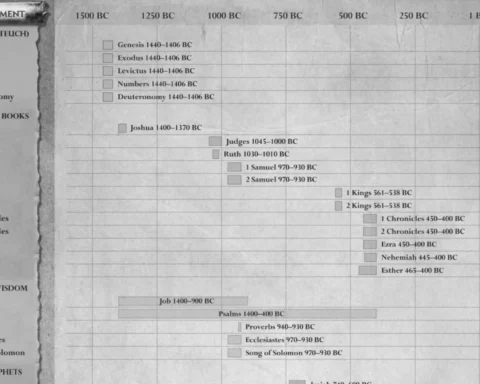
26 The Bible was written over several thousand years as God progressively revealed Himself to us along with His plan for humanity as it unfolded throughout history. → [Choosing a Bible]
27 Hebrew and Aramaic (OT); Greek (NT).
28 → [Reading and Studying the Bible]
29 This also includes every promise He has made to us in Scripture!
30 → [Science Versus the Bible]
31 The Bible contains hundreds of fulfilled prophecies, documented miracles, and eyewitness testimonies.
In days and centuries past, men understood and acknowledged that there was a God, even if they chose not to obey Him (Act 17:23; Rom 1:20–22; cf. 2Co 4:4). But in today’s modern, so-called “enlightened” society dominated by public opinion and the science of man, we must reassert that foundation before we can even begin with the Gospel message.
Therefore, know that “there is a God” (Psa 58:11; Dan 2:28; cf. Gen 1:1; Deu 4:29; Psa 14:1–3; 19:1–3; 53:1–3; 90:2; 115:15; 145:18; Pro 1:7; 3:5–7; 9:10; Isa 40:28; 55:6; Jer 29:13; Luk 12:5; Joh 1:18; Act 17:22–29; Rom 1:20–21; 1Co 8:6; 1Th 1:9; Heb 11:6; 1Jn 4:8; Rev 3:20; 4:11). There are no other gods (little g; Isa 44:8; 45:5–6, 18, 21–22; 46:9; Deu 4:35, 39; 32:39; 1Ki 8:60; 1Ch 16:26; Psa 96:5; Joe 2:27; 1Co 8:4; 1Ti 1:17; 2:5; Rom 1:20–25). God is not a force, a feeling, or an “it”; He is a spiritual being of immense holiness, righteousness, love, purity, power, and intelligence far beyond anything we can comprehend (Isa 6:3; 55:8–9; Pro 3:19; Rev 4:8; 1Pe 1:16; 1Jn 4:8–10).
THE NAME OF GOD IN THE OLD TESTAMENT1
God introduces Himself in the very first verse of the Bible and is identified by the Hebrew2 word “Elohim,”3 4 which is translated in English as “God” (Gen 1:1). The word conveys the quality or nature of being divine—that is, having the essential nature of deity.
God’s personal name is later given as “YHWH” in the original Hebrew (Gen 2:4; Exo 6:2–3).5 It indicates and denotes God’s self-existent, eternal nature. You will see this written as “Lord” (small caps), “Yahweh,” and “Jehovah” (small caps) / “Jehovah”6 in various English translations.
The Hebrew word “Adonai,”7 which means Lord or Master, written as “Lord” (standard case), is also used for God (e.g., Gen 15:2, 8; 18:27; Exo 4:10, 13; Isa 6:1; Dan 9:19). You can also see combinations of these words written as “Lord God”8 (e.g., Gen 2:4–5, 7–9; Exo 9:30; Psa 72:18) and “Lord God”9 (e.g., Gen 15:2, 8; Deu 3:24; Jos 7:7; Psa 71:5; 73:28).
God’s name is also given in idiom form as “I AM WHO I AM” or simply “I AM” (Exo 3:13–14).10
In summary, you will see God identified in the OT, in the following ways:
- “God” (Elohim; e.g., Gen 1:1–31; 2:2–3; 5:1; Exo 3:6; Psa 3:2, 7; 5:2; 42:1–6; 43:4–5),
- “Lord”11 (YHWH; e.g., Gen 2:4–5; Exo 6:1–3; Psa 1:2, 6; 2:2, 7, 11; 6:2–4, 8–9; 35:1),
- “Lord”12 (Adonai; e.g., Gen 18:27, 30–32; Exo 34:9; Psa 2:4, 37:13; 54:4; 66:18),
- “Lord God” (YHWH Elohim; e.g., Gen 2:4–5, 7–9; Exo 9:30; Psa 72:18),
- “Lord God” (Adonai YHWH; e.g., Gen 15:2, 8; Deu 3:24; Jos 7:7; Psa 71:5; 73:28),
- “Lord God” (Adonai Elohim; e.g., Dan 9:3),
- The “Lord our God” (YHWH our Elohim; e.g., Exo 3:18; 5:3; 8:10; Psa 99:5; Isa 36:7; Jer 3:22–23; Dan 9:14), and
- “I AM” (Exo 3:13–14; Cf. Joh 8:58).
Additionally, God is also referred to by many other names, which are more descriptive in nature and indicative of His position, power, presence, providence, and protection. Some examples are given below:13
- The “Creator” (Ecc 12:1; Isa 27:11; 40:28; 42:1; 43:15),
- The “Father” (e.g., see Deu 32:6; Isa 63:16; 64:8; Jer 3:4, 19; 31:9; Mal 1:6; 2:10)
- The “Lord of hosts” (e.g., 1Sa 1:3; 4:4; 1Ch 11:9; Psa 24:10; 46:7, 11; Isa 1:9),
- The “Lord our righteousness” (Jer 23:6),
- The “Lord is my shepherd” (Psa 23:1),
- The “Lord our Maker” (Psa 95:6),
- “God Most High” (Gen 14:18–22; Psa 57:2),
- “God Almighty” (Gen 17:1; 28:3; 35:11; 43:14; 48:3; Exo 6:3; 10:5),
- The “living God” (e.g., Deu 5:26; Jos 3:10; 1Sa 17:26, 36; Psa 42:2; 84:2; Jer 10:10)
- “God their Savior” (Psa 106:21 cf. Psa 17:7; Isa 43:3; 45:15, 21; 60:16; 63:8; Jer 14:8),
- The “righteous God” (Psa 7:9; cf. Isa 45:21),
- The “Holy One of Israel” (e.g., 2Ki 19:22; Psa 71:22; 78:41; 89:18; Isa 1:4; 29:23; 43:3 cf. Exo 3:18; 5:1, 3; 7:16; 9:1, 13; 10:3; 24:10; Ezr 5:1; Psa 68:35),
- The “God of Abraham, Isaac, and Jacob” (paraphrase; e.g., Exo 3:6, 15; 4:5; Psa 20:1; 46:7, 11),
- The “Everlasting God” (Gen 21:33; Isa 40:28),
- The “Ancient of Days” (Dan 7:9, 13, 22),
- The “Lord will provide” (Gen 22:14),
- The “Lord your healer” (paraphrase; Exo 15:26),
- The “Lord is Peace” (Jdg 6:24), and
- The “Rock” (e.g., Deu 32:4, 15, 2Sa 23:3; Psa 18:2; 31:3; Isa 26:4; 30:29).
THE NAME OF GOD IN THE NEW TESTAMENT
When the Hebrew OT was translated into Greek,14 and when the NT was written in Greek,15 the Hebrew word for “God” (Elohim) became the Greek word “Theos,” which is written in English as “God.” Additionally, the Hebrew word for “Lord” (YHWH) became the Greek word “Kurios,” which is written in English as “Lord.”16
In summary, you will see the following used when referring to God (the Father) in the NT:
- “Lord” (e.g., Mat 1:20, 22; Mat 11:25; Luk 10:21; Act 17:24; Rom 4:8; Jas 5:10),17
- “God” (e.g., Mat 1:23; Mat 3:9; Mat 6:30; Act 7:2; Rom 8:33; 2Co 1:3; 1Pe 5:10), and
- “Lord God” (kurios theos; e.g., Luk 1:32, 68).
Furthermore, God (the Father) is also referred to in more descriptive ways as well:
- “Father”18 (e.g., Mat 6:9; 11:25; Joh 3:35; 14:6; 17:1; Rom 8:15; Eph 1:3; 1Pe 1:3),
- “Our Father who is in heaven” (Mat 6:9),
- “Lord of heaven and earth” (Mat 11:25; Luk 10:21; Act 17:24),
- The “God and Father of our Lord Jesus Christ” (Rom 15:6; 2Co 1:3; Eph 1:3; 1Pe 1:3),
- The “Father of mercies and God of all comfort” (2Co 1:3),
- The “God of peace” (Rom 15:33; 16:20; Php 4:9; 1Th 5:23; Heb 13:20),
- The “Father of lights” (Jas 1:17),
- The “God of hope” (Rom 15:13),
- The “God who gives perseverance and encouragement” (Rom 15:5),
- The “God of all grace” (1Pe 5:10),
- The “Father of spirits” (Heb 12:9),
- The “Almighty,” “Lord Almighty,” or “Lord God the Almighty” (2Co 6:18; Rev 19:15; 21:22),
- The “Most High” or “Most High God” (Mar 5:7; Luk 1:32, 35, 76; 6:35; 8:28; Act 7:48; 16:17; Heb 7:1),
- The “Majesty on high” (Heb 1:3),
- The “one and only God” (Joh 5:44),
- The “only God our Savior” (Jud 25),
- The “Redeemer” (see Job 19:25; Psa 19:14; 78:35; Pro 23:11; Isa 41:14; 43:14; 44:24; 63:16; Jer 50:34),19
- A “living and true God” (1Th 1:9),20
- The “King eternal, immortal, invisible, the only God” (1Ti 1:17),21
- “Him who is true” (1Jn 5:20),
- “Him who is and who was and who is to come” (Rev 1:4),
- The “God of glory” (Act 7:2), and
- “Abba! Father!” (Rom 8:15).
Now, you might wonder why I wrote the above as referring to God (the Father). It is because the NT also refers to Jesus of Nazareth as God—which He is! Jesus will be covered separately and more fully in later chapters, and I will show from Scripture that Jesus is, in fact, God. I will also explain the names by which Jesus is identified.22
GOD IS HOLY, ALL-POWERFUL, AND ALL-KNOWING
God alone is “holy” (Lev 19:2; Rev 4:8; Act 7:33; 1Pe 1:16; Isa 6:3; Psa 11:4; 29:2; 103:1), perfect, omnipotent (all powerful), omnipresent (everywhere present), omniscient (all knowing—past, present, and future), and eternal (Joh 1:1–2; 8:58; 17:5; Rev 1:8, 17–18; 2:8; 21:6; 22:13; Heb 1:10–12; 13:8; 1Pe 1:20; Exo 3:13–14; Col 1:17; Jas 1:17; Isa 9:6; 43:13; 55:8–9; 1Jn 3:20; Rom 11:33–36; Gen 18:14; Psa 19:7; 90:2; 147:5; Pro 8:22–30; Jer 32:27; Mic 5:2).23 There is nothing unclean whatsoever in Him (1Jn 1:5; 3:5; Jas 1:17; Isa 6:3; Rev 4:8–10; Psa 5:4; 145:17; Tit 1:2; Heb 4:15; 1Pe 1:19; Num 23:19; cf. Gal 5:9), for “God is Light, and in Him there is no darkness at all” (1Jn 1:5; cf. Rom 3:4; 9:14; Mat 4:16; 17:2; Luk 1:79; Joh 1:5; 3:19; 8:12; 12:35, 46; Mic 7:8; Job 12:22). Yes, God is the Great “I AM.” He is “the Lord of hosts” (see Psa 24:10; 46:7, 11; 48:8; 84:1, 3, 12; Isa 1:9). Nothing can surprise Him or catch Him off guard, and there is nothing that He doesn’t know, for “nothing is hidden” from God.24 Furthermore, nothing is impossible with God (Mat 19:26; Mar 10:27; 14:36; Luk 1:37; 18:27; Gen 18:14; Num 11:23; Jer 32:27). He “upholds all things by the word of His power” (Heb 1:3), and it is He who created and sustains all life, for without God, there can be no life. “God is love” itself (1Jn 4:8, 16), and He is majesty defined. Amazing!
GOD IS SPIRIT
Those who mock God and refuse to believe that He exists because “science can’t prove it”25 fail to understand that “God is Spirit” (Joh 4:24; cf. 2Co 3:17), “who alone possesses immortality and dwells in unapproachable light, whom no man has seen or can see” (1Ti 6:16; cf. 1Ti 1:17; Joh 1:18; 5:37; Mat 17:2; Rom 1:20; Col 1:15–16). He is not bound by space and time, as we are in this physical universe. Therefore, we must find God through faith, as it is written:
- “Without faith it is impossible to please Him, for he who comes to God must believe that He is [i.e., that He exists] and that He is a rewarder of those who seek Him” (Heb 11:6; Heb 7:25; 11:27; Joh 1:18; 5:36; 10:25, 30, 32, 38; 12:38–40; 14:7–11, 20; Col 1:15–19; 2:2, 9; Rom 1:19–20; 2:15; Psa 19:1–4; Act 14:16–17; Jas 4:8);
- “Behold, I stand at the door and knock; if anyone hears My voice and opens the door, I will come in to him and will dine with him, and he with Me” (Rev 3:20);
- “You will seek Me and find Me when you search for Me with all your heart” (Jer 29:13; Jer 24:7; Deu 4:29; 30:2, 10; Luk 11:9–10; Act 8:37; 17:27; Psa 91:15; 119:2, 10, 145; Isa 55:6–7; Hos 5:15; Amo 5:4; Zep 2:3; Joe 2:12; contrast with Mat 15:8; Psa 14:1; 53:1; 1Co 1:18–24; 2:14); and
- “The Lord is near to all who call upon Him,
To all who call upon Him in truth” (Psa 145:18).
THE BIBLE IS GOD’S WORD
The Bible is God’s Holy Word, supernaturally given to us through human writers inspired by the Holy Spirit (2Ti 3:16–17; 2Pe 1:19–21; Heb 4:12; 1Co 2:12–13; 14:37; cf. 2Sa 23:2; Mat 4:4; Joh 14:26; 16:13; 17:17; Act 1:16; 1Th 2:13), and it was written for our benefit (Rom 15:4; cf. Pro 5:23; Psa 19:8; 119:16, 105).26 Every word is, therefore, inspired and inerrant in the original languages;27 Scripture is without error, without contradiction, doesn’t change, and is never broken (Psa 119:89, 152, 160; Heb 13:8; Joh 10:35; Mat 5:18; Isa 40:8; 1Pe 1:25). It is written that God doesn’t change His mind and also that “God is not a man, that He should lie” (Num 23:19; cf. Rom 3:4; Tit 1:2; Heb 6:18; 13:8; Jas 1:17), so we can trust God and know that every single syllable and word of Scripture is there for a reason and will come true.28, 29 It is through Scripture that we know and understand God, along with His laws and rules for us, His plans for humanity, and our eternal destiny.
YOU MUST DENY REASON AND LOGIC TO DENY GOD
Please understand that God is not asking you to just “blindly believe” in Him. He has provided much evidence and proof of His existence. In fact, the Bible provides overwhelming evidence for God (through fulfilled prophecies, etc.), and many other disciplines provide supporting evidence that what the Bible says is indeed true—through fields such as archaeology, geology, literary history, and world history.30 One comes to faith after a logical, rational, and reasoned evaluation and examination of all the available facts as well as from hearing the Gospel explained (what this book is doing; Rom 10:17). In summary, God has revealed Himself to us through:
- Evidence of creation—as seen in nature (Rom 1:18–20; Act 14:16–17; Psa 8:3–4; 19:1–6; Isa 40:26; Job 38:1–42:6),
- Scripture—God’s Holy Word, the Bible (2Ti 3:16–17; Joh 5:39; Heb 4:12; Pro 30:5),31 and
- His Son—Jesus the Christ (Col 1:15; Heb 1:1–4).
We also have the testimony of:
- Our “conscience” (Rom 2:15; cf. Rom 13:5; 2Co 1:12; 5:11; 1Ti 4:2; Heb 10:22; 13:18; 1Pe 3:21), and
- The “striving” of the Holy Spirit (see Gen 6:3; cf. Joh 16:8; Mar 3:28–29).
Therefore, those who deny God are “suppressing the truth in unrighteousness” and are “without excuse” (see Rom 1:18–20). They are doing so against an overwhelming mountain of evidence that speaks to (“witnesses”; see Act 14:16–17; Rev 11:3–11) and confirms His existence, and they are also doing so against their own inner conscience (Rom 1:18–20; Act 14:17; Psa 19:1–4; cf. Rom 2:14–15; Act 17:23–30), which testifies to them that, yes, “there is a God” (Rom 1:20–25).
1 This section will be somewhat technical, but we must treat the name of the Lord with reverence and respect. We also need to look at the original Hebrew and Greek words to obtain a correct understanding. I’ve tried to keep it simple for someone coming new to the Bible, and I’ve moved the technical details into the footnotes. Also, some of this information is specific to the NASB 1995 English Bible; you may see slightly different words and capitalization used in other translations.
2 Most of the OT was written in Hebrew. A very small portion was written in the Aramaic language (Dan 2:4b–7:28; Ezr 4:8–6:18; 7:12–26; Jer 10:11; Gen 31:47 [two words]).
3 From the Hebrew ‘ĕlôhı̂ym (אֱלֹהִים, Elohim, H430). Note that Hebrew is read from right to left.
4 The word “Elohim” is plural in form. We understand today that God exists as three Persons: Father, Son (Jesus the Christ), and Holy Spirit (or Holy Ghost, KJV). Each Person is fully God, and the three Persons are fully one. God uses plural pronouns (“Us,” “Our”) when referring to Himself (see Gen 1:26). It is very difficult for us to comprehend the fullness of God as expressed by the Holy Trinity. In fact, our finite intellect cannot begin to approach God’s infinite mind or His infinite knowledge and wisdom (Isa 55:8–9; Pro 3:5–7; Rom 11:33; 1Co 2:14, 16a; Job 38:1–7; cf. Pro 14:12). See also Wayne Jackson, “The Biblical Doctrine of the Godhead,” Christian Courier, christiancourier.com/articles/the-biblical-doctrine-of-the-godhead, and Wayne Jackson, “What about the Terms ‘Godhead’ and ‘Trinity’?” Christian Courier, christiancourier.com/articles/what-about-the-terms-godhead-and-trinity.
5 From the Hebrew yehôvâh (יהוה, H3068). Some English translations use YHVH instead of YHWH. This is called the tetragrammaton, which simply means four letters. It is unpronounceable (it has no vowels), and it conveys the meaning “to be.”
6 Note that the word “Jehovah” (or “Yehovah”) is a term that was artificially constructed by man, created by adding vowels to YHWH so it would become pronounceable. Despite the claims of some, there is no special significance to English translations that use the word Jehovah/Jehovah versus the word Lord. Both represent YHWH, which the name of the Lord.
7 From the Hebrew ‘ădônây (אדני, H136).
8 From the Hebrew yehôvâh ‘ĕlôhı̂ym (YHWH Elohim).
9 From the Hebrew ‘ădônây yehôvâh (Adonai YHWH).
10 An idiom is an expression with a meaning that cannot be understood by the individual words. It could be translated as “I will become whatsoever I may become,” again denoting God’s eternal nature of “being” or “He who becometh.” In effect, the expression “I AM” explains what the name “YHWH” means: God is eternally self-existing, having no beginning and no end. We will see later that Jesus also identified Himself with this name (see Joh 8:58).
11 “Jehovah” in some translations (e.g., ASV).
12 As in “the Lord,” “The Lord,” and “O Lord.”
13 For a more comprehensive list → [Names of the Lord]
14 The Septuagint (LXX).
15 The NT was written in Koine Greek, which was the common form of Greek used in the first century.
16 In short, the Hebrew to Greek translations are:
- God (‘ĕlôhı̂ym) is normally translated as theos (θεός, G2316).
- YHWH (yehôvâh) is normally translated as kurios (κύριος, G2962).
17 Some occurrences of “Lord” come from the Greek despotēs (δεσπότης, G1203) meaning “Master” instead of from kurios (e.g., Luk 2:29; Act 4:24; Rev 6:10).
18 From the Greek patēr (πατήρ, G3962).
19 These verses applied to the Father. We know today that the redemption of mankind has been made manifest and completed through the shed blood of His Son, Jesus of Nazareth, the Christ of God. You will also, therefore, see “redeemer” verses applied to Jesus. → [Our Hope]
20 While this verse is being applied specifically to the Father, it can also be applied to Jesus—for Jesus most definitely is God and He lives! (see also next foonote).
21 This may also be interpreted as referring to the Godhead as a whole, including Jesus. → [Our Hope]
22 → [Our Hope, Bible Prophecy Foretold Jesus, Is Jesus Really God?]
23 Holy means sacred and morally perfect (pure). God’s holiness is beyond anything we can imagine; please do not underestimate this fact. We often fail to ascribe to God His proper holiness while simultaneously grossly underappreciating how bad even the most minor of sins are when compared to a holy God. It is altogether too easy to become complacent and treat God casually and not with the honor and respect that He deserves.
25 → [Science Versus the Bible]
26 The Bible was written over several thousand years as God progressively revealed Himself to us along with His plan for humanity as it unfolded throughout history. → [Choosing a Bible]
27 Hebrew and Aramaic (OT); Greek (NT).
28 → [Reading and Studying the Bible]
29 This also includes every promise He has made to us in Scripture!
30 → [Science Versus the Bible]
31 The Bible contains hundreds of fulfilled prophecies, documented miracles, and eyewitness testimonies.